5 Hiring Mistakes Nonprofits Make (and How to Avoid Them)

Even the most mission-driven organizations can inadvertently make hiring harder than it needs to be. In today’s dynamic talent market, where strong candidates have more options and higher expectations than ever before, the way you design your hiring process matters. At Talbott Talent, we’ve seen it all from thoughtful, inclusive hiring practices that engage top-tier talent, to outdated approaches that cause promising candidates to walk away. While no two searches are the same, there are some common pitfalls that we see over and over again.
Here are five mistakes nonprofits often make when hiring and how to fix them:

Mistake #1: Confusing Availability with Commitment
Many organizations still operate under the assumption that a longer, more complex hiring process filters for the most dedicated candidates. But what this actually measures is how much time a person has, not how motivated they are to contribute to your mission. In an effort to “test interest,” some processes end up demanding multiple rounds of interviews, essays, deliverables, or unclear timelines that stretch out for weeks. That’s not a measure of commitment; that’s a measure of privilege and capacity.
Strong candidates are often juggling full-time roles, familial relationships, or other personal obligations. If the process becomes too time-intensive, they may simply opt out. Not because they lack interest, but because they don’t have the bandwidth. Instead, design a hiring process that is clear, timely, and respectful. A streamlined experience signals that your organization is professional, decisive, and aware of the demands on a candidate’s time.
Mistake #2: Asking the Wrong Questions
Nonprofits are often driven by their values, which makes cultural alignment and communication style just as important as technical skills. But many interviews still rely on traditional or vague questions like, “Tell me about your strengths and weaknesses,” or “Where do you see yourself in five years?” These kinds of prompts tend to elicit rehearsed or surface-level answers.
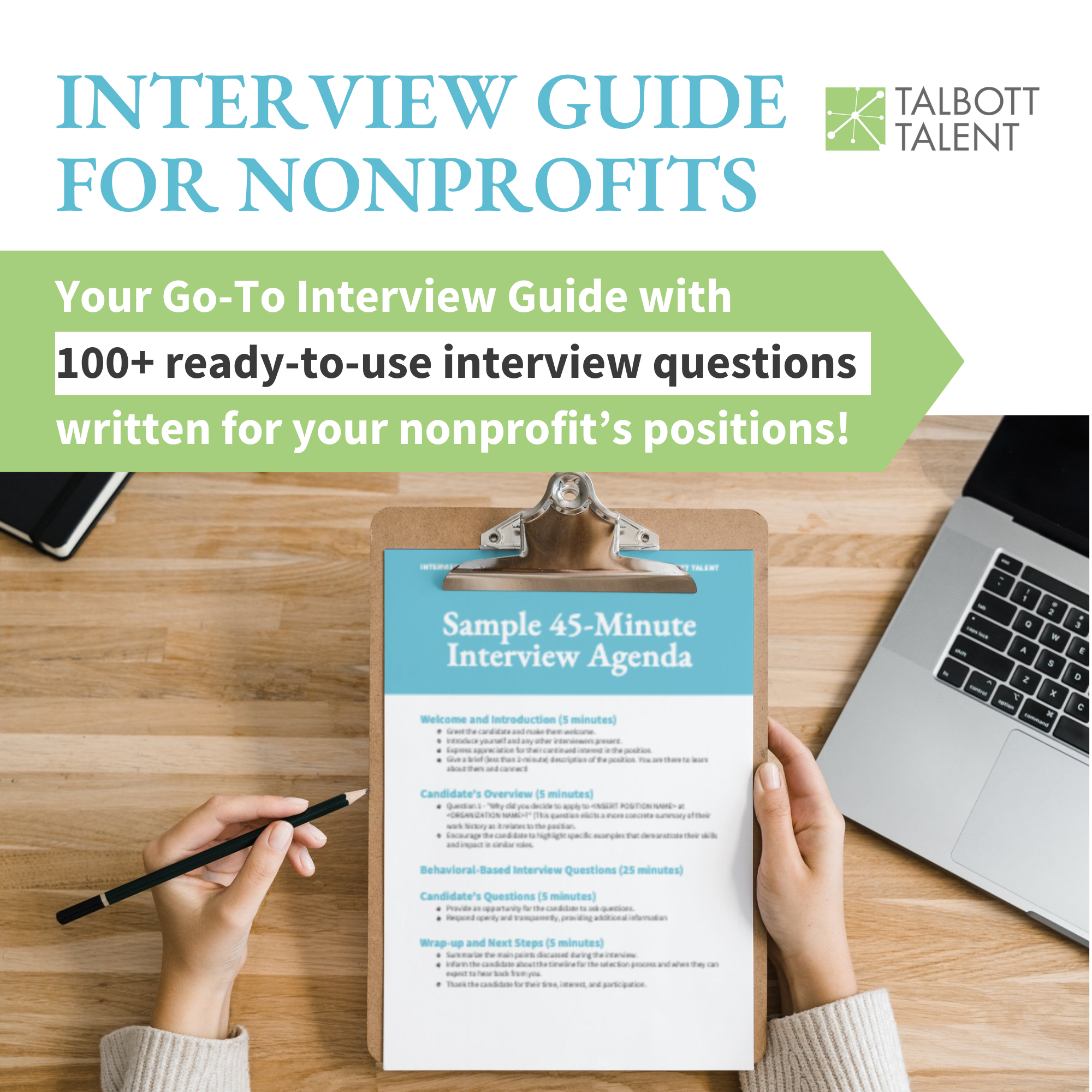
A better alternative relies on behavioral-based interviewing, which asks candidates to describe how they’ve navigated specific challenges in the past. For example: “Tell me about a time you had to manage competing priorities,” or “Describe a moment when you had to lead through change.” These kinds of questions offer a much clearer window into how someone actually thinks and operates and whether or not they’re equipped to thrive in your particular work environment.
Mistake #3: Relying Too Much on Take-Home Projects
The rise of remote work, AI tools, and global talent marketplaces have all changed how organizations assess skills. But one trend that can backfire is assigning deliverables or projects for candidates to complete outside of interviews. On the surface, this might seem like a fair way to gauge ability. In reality, it often disadvantages candidates who can’t afford to do unpaid work during a job search. It also fails to control for how those deliverables are completed. Are you evaluating someone’s strategy and insight, or just how well they used ChatGPT or a Canva template?
A more effective approach is to build dynamic, interactive elements into the interview itself that include things like problem-solving together, asking for verbal walkthroughs, or reviewing past work samples with context. This kind of dialogue not only saves candidates time trying to complete a bunch of tasks, but it also gives you a clearer, more accurate sense of their skills and judgment.
Mistake #4: Hiring for the Past, Not the Future
When replacing a beloved or long-serving staff member, it’s natural to look for someone who can “fill their shoes.” But trying to replicate a previous employee, especially without a fresh needs assessment, can limit your organization’s potential. The role may have changed, the team around it may have changed, and your organizational goals may be heading in a new direction.
Rather than trying to duplicate the past, take time to reflect on what’s needed now and in the near future. What skills or leadership traits will help move your nonprofit’s mission forward? What gaps currently exist on your team? Aligning the role with your current strategy ensures that the new hire will be positioned for impact and won’t feel like they’re living in someone else’s shadow.
Mistake #5: Thinking the Interview Is One-Sided
One of the most important shifts in the current talent market is that candidates are interviewing you just as much as you’re interviewing them. Top candidates are evaluating your culture, your clarity, and your commitment to equity and inclusion. They’re asking themselves: “Would I be supported here? Is this team aligned with my values? Will my work be respected?”
When employers approach interviews like an interrogation or treat candidates as though they’re lucky just to be in the room, they miss the opportunity to build trust. That’s why hiring managers should think of interviews more like conversations than tests, more like mutual explorations of whether this is the right match for both parties. A transparent, relational process signals that your organization is confident, collaborative, and self-aware. These are all qualities that great candidates are looking for, too.

Setting the Tone for Success
Ultimately, an effective hiring process sets the tone for everything that follows. It reflects your organization’s values, communicates your expectations, and gives the candidate a sense of what it would be like to work with you. By avoiding these common mistakes and approaching each search with intention, nonprofits can create more equitable, efficient, and successful hiring experiences. For the person who joins your team, it’s also the beginning of a working relationship where both the organization and the individual have the opportunity to grow and thrive together.
Looking to grow your team?
Contact us to learn how we can support your next staff or executive search.